


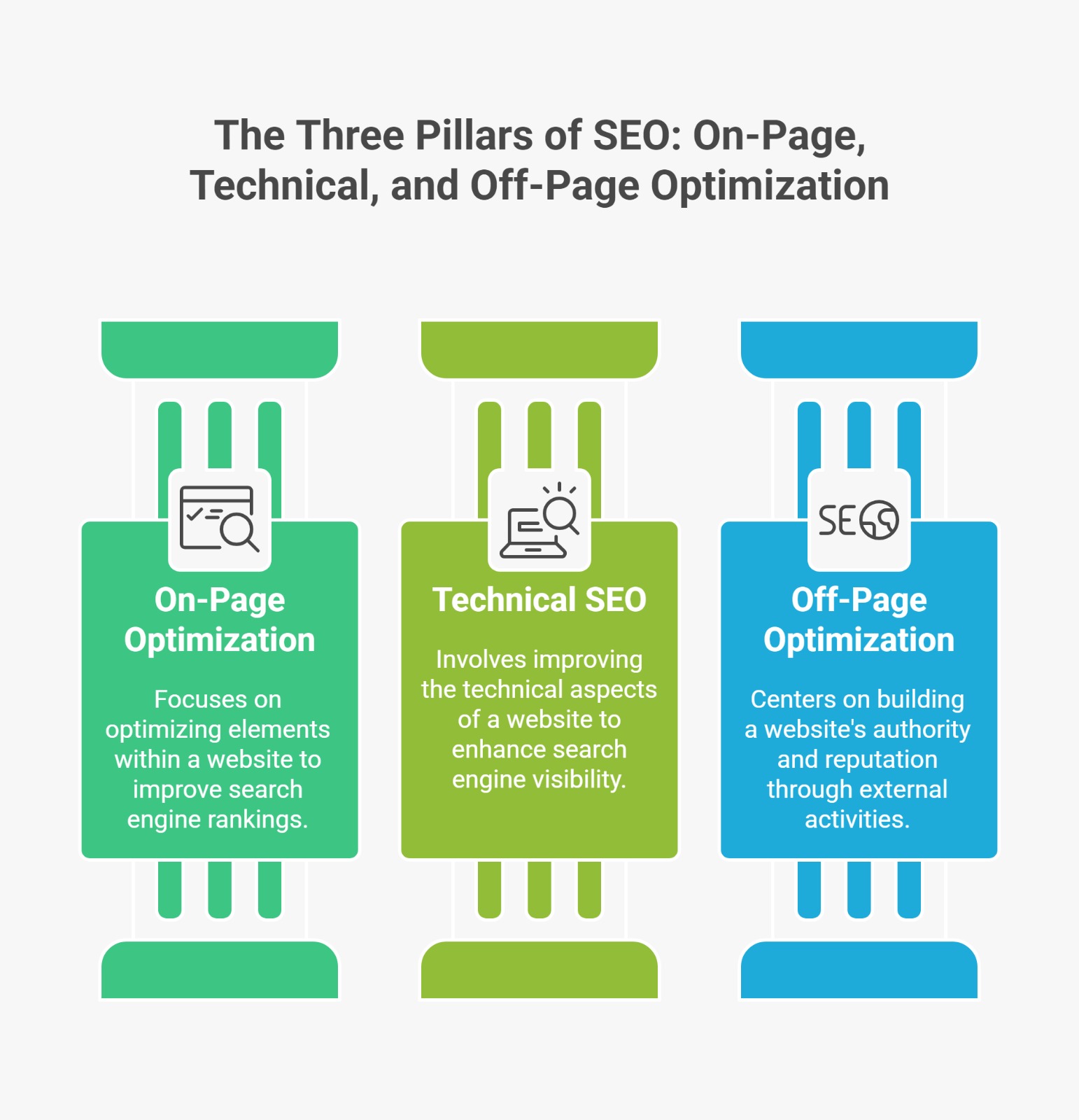
The Three Pillars of SEO: On-Page, Technical, and Off-Page Optimization
This document outlines the three fundamental pillars of Search Engine Optimization (SEO): On-Page Optimization, Technical SEO, and Off-Page Optimization. Understanding and effectively implementing strategies within each of these pillars is crucial for achieving higher search engine rankings, driving organic traffic, and ultimately, achieving online success. This guide will delve into the key components of each pillar, providing actionable insights and best practices for optimizing your website for search engines and users alike.
On-Page Optimization
On-Page Optimization refers to the practice of optimizing individual web pages to rank higher and earn more relevant traffic in search engines. It involves controlling elements within your website that directly influence search engine rankings.
Keyword Research and Targeting
The foundation of any successful SEO strategy is thorough keyword research. This involves identifying the terms and phrases that your target audience is using when searching for information related to your business, products, or services.
Tools: Utilize keyword research tools like Google Keyword Planner, SEMrush, Ahrefs, and Moz Keyword Explorer to discover relevant keywords, analyze their search volume, and assess their competition.
Types of Keywords: Focus on a mix of head keywords (broad, high-volume terms) and long-tail keywords (specific, low-volume phrases). Long-tail keywords often have lower competition and can attract highly qualified traffic.
Keyword Mapping: Map your target keywords to specific pages on your website. Each page should have a primary keyword and a few related secondary keywords.
Content Optimization
High-quality, relevant, and engaging content is essential for attracting both search engines and users.
Content Quality: Create original, well-written, and informative content that provides value to your audience. Avoid duplicate content and keyword stuffing.
Content Length: Aim for longer, more comprehensive content that covers the topic in detail. Search engines tend to favor in-depth articles.
Content Freshness: Regularly update your content to keep it fresh and relevant. This signals to search engines that your website is active and up-to-date.
Keyword Integration: Naturally incorporate your target keywords into your content, including the title, headings, body text, and image alt text.
Title Tags and Meta Descriptions
Title tags and meta descriptions are crucial for attracting clicks from search engine results pages (SERPs).
Title Tags: Create compelling and concise title tags that accurately reflect the content of the page and include your primary keyword. Keep title tags under 60 characters to avoid truncation in search results.
Meta Descriptions: Write engaging meta descriptions that summarize the content of the page and entice users to click. Include your primary keyword and a call to action. Keep meta descriptions under 160 characters.
Header Tags (H1-H6)
Header tags (H1-H6) help structure your content and make it easier for both users and search engines to understand.
H1 Tag: Use only one H1 tag per page to indicate the main topic of the page.
H2-H6 Tags: Use H2-H6 tags to create subheadings and organize your content into logical sections. Incorporate relevant keywords into your header tags.
Image Optimization
Optimizing images can improve your website's performance and SEO.
File Size: Compress images to reduce their file size without sacrificing quality. This will improve page load speed.
Alt Text: Add descriptive alt text to all images. Alt text helps search engines understand the content of the image and can also improve accessibility for visually impaired users.
File Names: Use descriptive file names that include relevant keywords.
Internal Linking
Internal linking involves linking to other relevant pages on your website.
Benefits: Internal linking helps search engines crawl and index your website more efficiently, distributes link juice throughout your site, and improves user navigation.
Strategy: Link to relevant pages within your content using descriptive anchor text.
URL Structure
A clean and descriptive URL structure can improve your website's SEO.
Best Practices: Use short, keyword-rich URLs that accurately reflect the content of the page. Avoid using special characters or underscores.
Technical SEO
Technical SEO focuses on optimizing the technical aspects of your website to improve its crawlability, indexability, and overall performance. It ensures that search engines can easily access, understand, and index your content.
Website Speed
Website speed is a crucial ranking factor.
Optimization Techniques: Optimize images, leverage browser caching, minify CSS and JavaScript files, and use a content delivery network (CDN) to improve website speed.
Tools: Use tools like Google PageSpeed Insights and GTmetrix to analyze your website's speed and identify areas for improvement.
Mobile-Friendliness
With the majority of internet users accessing websites on mobile devices, mobile-friendliness is essential.
Responsive Design: Use a responsive design that adapts to different screen sizes.
Mobile-First Indexing: Google primarily uses the mobile version of a website for indexing and ranking.
Site Architecture
A well-structured site architecture makes it easier for search engines to crawl and index your website.
Clear Navigation: Create a clear and intuitive navigation structure that allows users to easily find the information they are looking for.
Sitemap: Submit a sitemap to search engines to help them discover and index all of your website's pages.
Crawlability and Indexability
Ensure that search engines can easily crawl and index your website.
Robots.txt: Use a robots.txt file to control which pages search engines can crawl.
Noindex Tag: Use the noindex tag to prevent certain pages from being indexed.
Canonical Tags: Use canonical tags to specify the preferred version of a page when there are multiple versions with similar content.
Structured Data Markup
Structured data markup helps search engines understand the content of your pages and display rich snippets in search results.
Schema.org: Use Schema.org vocabulary to add structured data markup to your website.
Rich Snippets: Rich snippets can include information such as reviews, ratings, prices, and event details.
HTTPS
HTTPS (Hypertext Transfer Protocol Secure) is a secure protocol that encrypts communication between your website and users.
Security: HTTPS protects user data and improves website security.
Ranking Signal: Google uses HTTPS as a ranking signal.
Off-Page Optimization
Off-Page Optimization refers to activities performed outside of your website to improve its search engine rankings. It primarily focuses on building your website's authority and reputation.
Link Building
Link building is the process of acquiring backlinks from other websites.
Quality over Quantity: Focus on acquiring high-quality backlinks from reputable websites.
Types of Backlinks: Earn backlinks through guest blogging, content marketing, broken link building, and resource page link building.
Anchor Text: Use relevant anchor text when acquiring backlinks.
Social Media Marketing
Social media marketing can indirectly improve your website's SEO.
Brand Awareness: Social media can help increase brand awareness and drive traffic to your website.
Social Signals: While social signals are not a direct ranking factor, they can influence search engine rankings indirectly.
Brand Mentions
Brand mentions are mentions of your brand name on other websites, even without a link.
Reputation: Brand mentions can help build your brand's reputation and authority.
Monitoring: Monitor brand mentions and engage with those who are talking about your brand.
Online Reputation Management
Online reputation management involves monitoring and managing your brand's online reputation.
Reviews: Encourage customers to leave reviews on relevant platforms.
Responding to Feedback: Respond to both positive and negative feedback in a timely and professional manner.
By focusing on these three pillars of SEO – On-Page, Technical, and Off-Page Optimization – you can significantly improve your website's search engine rankings, drive organic traffic, and achieve your online business goals. Remember that SEO is an ongoing process that requires continuous monitoring, analysis, and adaptation.
